
A simple hair care routine comes down to four things: wash with a shampoo suited to your scalp, condition the lengths and ends, dry and style with minimal heat, and space out washing based on your hair type. Most people only need 3–5 products and about 15–20 minutes on wash day to keep their hair looking healthy.
If your hair routine currently consists of “shampoo, rinse, hope for the best,” you’re not doing anything wrong — you’re just missing a few small steps that make a real difference. A good hair care routine doesn’t require ten products or an hour in front of the mirror. It requires the right few steps, done consistently, in the right order.
This guide walks through a simple hair care routine you can start today, how to adjust it for your hair type, and the small daily habits that quietly do more for your hair than any expensive product.
What Makes a Hair Care Routine “Simple”
A simple hair care routine focuses on the basics that actually affect hair health: cleansing, conditioning, gentle drying, and protecting hair from unnecessary damage. It skips trends, layered treatments, and products that promise more than they deliver.
Think of it in three layers:
- Core routine – shampoo and conditioner, used correctly and at the right frequency
- Support habits – how you dry, brush, tie up, and sleep on your hair
- Occasional extras – a deep conditioner or scalp treatment once a week, if your hair needs it
Most people only need the first two layers. The third is optional, not mandatory, and that’s exactly why a basic hair care routine works for almost everyone, regardless of hair type or budget.
Know Your Hair Type Before You Start
Every hair care routine works better once you know what you’re actually working with. Two things matter most: your scalp’s oil production and your hair’s texture.
Scalp type
Your scalp behaves a lot like skin. Some scalps produce oil quickly and need more frequent washing. Others stay drier for longer and do better with a lighter touch. Watch your hair on day two or three after washing — if roots look flat and oily by then, you likely have an oilier scalp; if hair still looks fresh, you’re on the drier side.
Hair texture
Texture affects how often you wash and how much conditioner you need:
- Straight hair – oil travels down the hair shaft faster, so roots can look greasy sooner
- Wavy hair – often oily at the roots and drier at the ends, so it needs a mixed approach
- Curly hair – naturally drier because oil has a harder time traveling down the curve of the strand
- Coily hair – usually needs the most moisture and the least frequent washing
You don’t need a lab test to figure this out. A day or two of paying attention to how your hair actually behaves will tell you more than any product label.
The Simple Hair Care Routine, Step by Step
This is the core simple hair care routine — the same four steps, done in order, every wash day.
Step 1: Wet hair thoroughly before shampooing
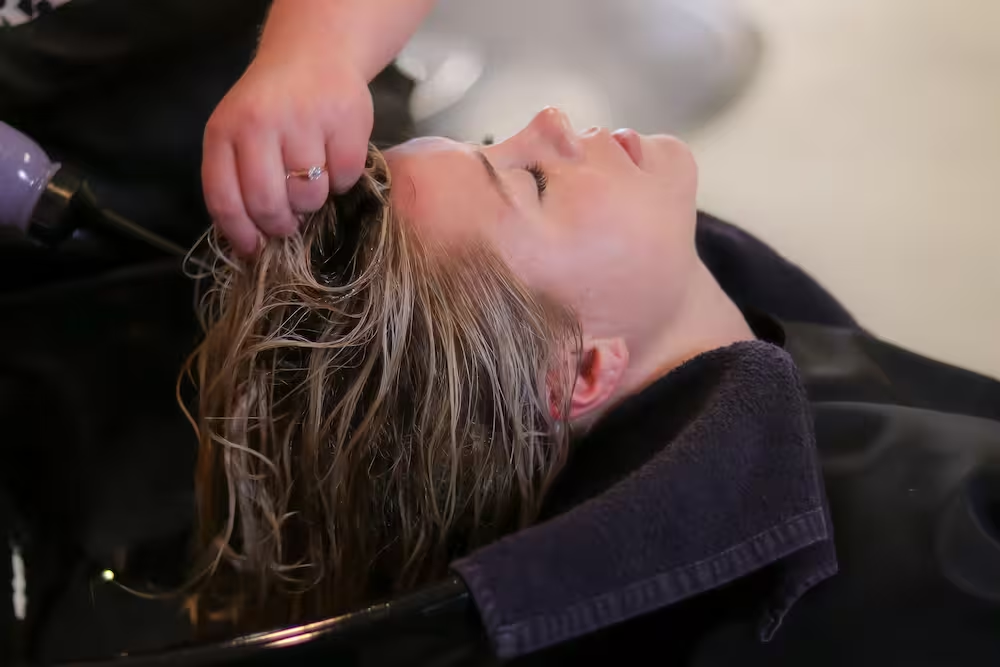
Fully saturate hair with lukewarm water for at least a minute before applying shampoo. This helps the product spread evenly and lather properly, so you use less of it.
Step 2: Shampoo the scalp, not the length
Apply a coin-sized amount of shampoo to your palms, then work it into your scalp with your fingertips, not your nails. Your scalp is where oil, sweat, and product buildup actually collect — the lather that runs down the lengths as you rinse is usually enough to clean the rest of the hair. Shampooing the ends directly tends to dry them out unnecessarily.
Step 3: Condition the mid-lengths and ends
Skip the roots and focus conditioner from the ears down. Leave it on for one to three minutes so it has time to smooth the hair cuticle, then rinse with cooler water if you can stand it — cooler water helps the cuticle lie flat, which makes hair look shinier.
Step 4: Dry and style with a light hand
Blot hair with a towel instead of rubbing it — wet hair is more fragile and prone to breakage, so friction does more damage here than almost anywhere else in the routine. Detangle with a wide-tooth comb starting at the ends, and let hair air-dry partway before using any heat tool.

That’s the entire core of a daily hair care routine. Everything else is optimization, not necessity.
How Often Should You Wash Your Hair?
There’s no single correct washing frequency — it depends on scalp oil production, hair texture, and activity level. Here’s a general starting point:
| Hair Type | Typical Washing Frequency | Why |
|---|---|---|
| Oily, straight, fine hair | Every 1–2 days | Oil reaches the ends quickly and can weigh hair down |
| Normal, wavy hair | Every 2–3 days | Balanced oil production, moderate buildup |
| Dry or curly hair | Every 3–5 days | Oil travels slowly down the strand; over-washing dries hair further |
| Coily or chemically treated hair | Once a week, or every 7–10 days | Hair needs oil retention more than frequent cleansing |
These are starting points, not rules. If your scalp itches or looks flaky, you may need to wash more often, not less — buildup can look similar to dryness but needs the opposite fix.
Daily Habits That Support Your Hair Care Routine
A hair care routine isn’t only about wash day. A few small daily habits protect the progress you make in the shower.
- Brush before bed, not just before washing. A gentle brush-through with a boar-bristle or paddle brush helps distribute natural oils from scalp to ends, which reduces the greasy-roots, dry-ends problem many people deal with.
- Loosen tight hairstyles. Tight ponytails and buns pulled daily can stress the hairline over time. Alternate styles or keep them looser when you can.
- Protect hair before heat styling. A heat protectant spray reduces moisture loss when using dryers, straighteners, or curling tools.
- Switch to a silk or satin pillowcase if you can. Cotton pulls moisture from hair and creates friction overnight; silk and satin reduce both.
- Trim every 8–12 weeks. Regular trims remove split ends before they travel up the hair shaft and cause more visible damage.
None of these take more than a minute or two, but together they do more for how hair looks day to day than any single product.
Common Mistakes in a Basic Hair Care Routine
Even a simple hair care routine can go sideways with a few habits that seem harmless but add up over time.
- Washing hair too often “just in case.” Over-washing strips natural oils, which can actually trigger the scalp to produce more oil to compensate.
- Applying conditioner to the roots. This tends to weigh hair down and can make oily roots look oilier, faster.
- Brushing hair while soaking wet. Hair is at its most fragile when wet, so rough brushing at this stage is one of the most avoidable causes of breakage.
- Skipping heat protectant to save time. A 10-second spray takes far less time than repairing heat damage later.
- Using the same shampoo indefinitely regardless of season or scalp changes. Scalp needs can shift with weather, stress, or hormonal changes — a routine that stays static forever eventually stops working as well as it used to.
Simple Hair Care Routine Checklist
Use this as a quick reference once your routine is dialed in:
- Wet hair fully before shampooing
- Shampoo scalp only, not the lengths
- Condition from ears to ends
- Rinse with cooler water for shine
- Blot dry, don’t rub
- Detangle from ends upward with a wide-tooth comb
- Use heat protectant before styling
- Wash based on your hair type’s actual needs, not a fixed schedule
- Trim every 8–12 weeks
Frequently Asked Questions
What is the most basic hair care routine for beginners?
The most basic hair care routine is shampoo on the scalp, conditioner on the lengths and ends, gentle towel-drying, and minimal heat styling. Everything beyond that — masks, oils, serums — is optional, not required for healthy-looking hair.
How do I take care of my hair every day without over-washing it?
On non-wash days, brush hair to redistribute oils, avoid tight hairstyles that stress the hairline, and use a dry shampoo at the roots if needed. Daily hair care doesn’t mean daily washing — it means daily attention.
Should I wash my hair every day?
Most people don’t need to. Daily washing works for very oily, fine, straight hair, but it can dry out normal, wavy, curly, or coily hair. Watch how your scalp and roots actually behave rather than following a fixed rule.
Do I need a separate routine for different hair textures?
The core steps stay the same for every hair type. What changes is frequency and product richness — curlier and coilier hair generally needs more moisture and less frequent washing than straight or fine hair.
How long does a simple hair care routine take?
On wash days, expect roughly 15–20 minutes for shampooing, conditioning, and initial drying. Daily maintenance habits, like brushing or applying heat protectant, take a minute or two.
Is it necessary to use expensive hair products for healthy hair?
No. Consistency in the core steps — correct washing frequency, proper conditioning, gentle drying — matters more than product price. A mid-range shampoo and conditioner suited to your hair type will outperform an expensive one used incorrectly.
Key Takeaways
- A simple hair care routine is four steps: shampoo the scalp, condition the ends, dry gently, style with minimal heat.
- Washing frequency should match your hair type and scalp oil production, not a fixed daily or weekly rule.
- Small daily habits — brushing, loosening tight styles, using heat protectant — protect the results of your wash-day routine.
- Regular trims and cooler-water rinses are low-effort ways to keep hair looking healthier longer.
- You don’t need a large product collection. A few well-chosen products used consistently and correctly outperform a complicated routine.
Conclusion
Healthy-looking hair isn’t the result of a complicated routine or a shelf full of products — it’s the result of doing a few simple things consistently: washing based on what your hair actually needs, conditioning the right sections, handling wet hair gently, and giving it small daily care in between. Start with the core four steps, adjust the washing frequency to your hair type, and build from there only if you want to. That’s a routine you can actually stick to, which is the part that makes the biggest difference over time.
If you’re also working on your skin routine, pairing this with a simple approach to daily skincare can help you build one consistent, low-effort beauty routine overall.
