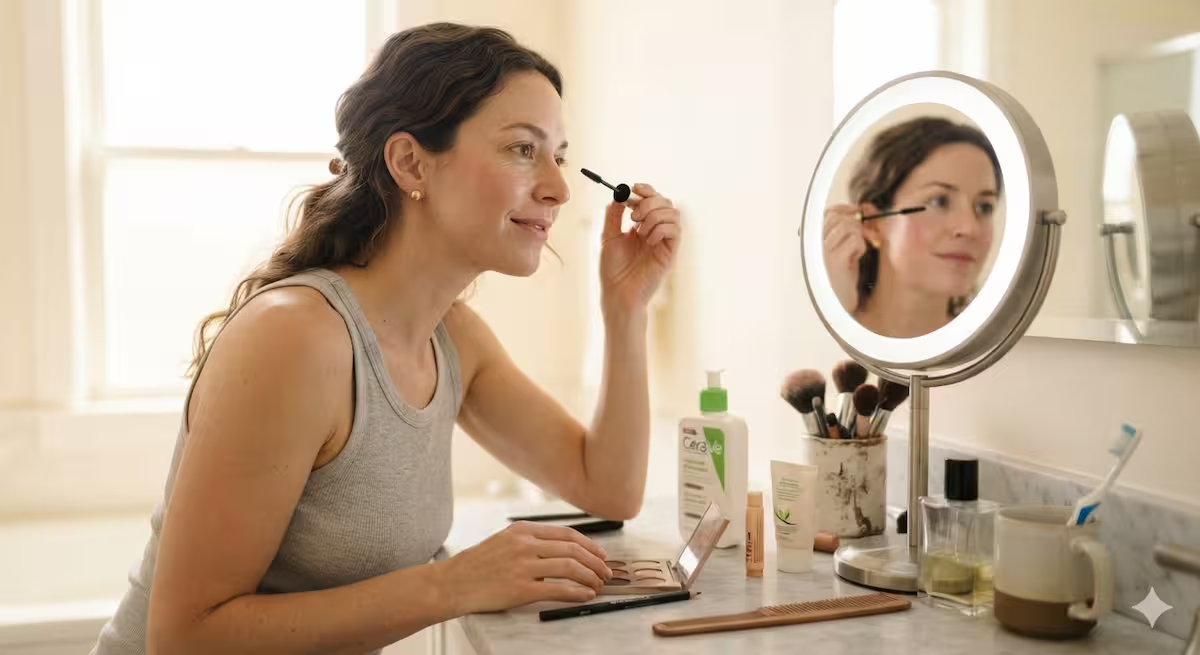
A simple beauty routine focuses on a few consistent habits instead of using many products. Start with gentle skincare, basic hair care, personal hygiene, sun protection, and optional makeup. Choose products that suit your needs, keep the routine easy to repeat, and add new steps only when they solve a specific problem.
Introduction
Beauty routines can quickly become overwhelming. Social media, advertisements, and endless product launches can make it seem as though you need a shelf full of beauty products and an hour every morning to look and feel your best.
You don’t.
A good simple beauty routine is not about doing more. It is about identifying the habits that make the biggest difference for you and repeating them consistently. Your routine might include cleansing your skin, moisturizing when needed, protecting exposed skin from the sun, caring for your hair, and doing a few small things that help you feel polished and confident.
The goal is to create an everyday beauty routine that fits your real life. If a routine is too expensive, complicated, or time-consuming, it is much harder to maintain.
In fact, dermatology guidance consistently supports a straightforward approach to skincare: using fewer, appropriate products consistently can be preferable to constantly adding products that may cause irritation.
This guide will help you build a realistic beauty routine for women that covers the essentials without turning beauty into another exhausting task on your to-do list.
What Is a Simple Beauty Routine?
A simple beauty routine is a small set of regular habits that help you care for your skin, hair, body, and everyday appearance without unnecessary steps or products.
It should be:
- Easy to remember
- Quick enough to fit into your day
- Appropriate for your individual needs
- Affordable enough to maintain
- Flexible when your schedule changes
- Focused on consistency rather than perfection
The most important idea is simple: your routine should work for you, not create more work for you.
A 10-step routine may be enjoyable for some people, but it is not automatically better. Dermatologists caution that using too many products, particularly multiple products with active ingredients, can irritate the skin.
A basic beauty routine can be surprisingly effective when the products and habits are appropriate for your needs.
The 5 Building Blocks of a Simple Beauty Routine
You do not need to change everything at once. Start by thinking about your beauty routine in five simple areas.
1. Skincare
Your skincare routine is the foundation of your everyday beauty habits.
For many people, the basics are:
- Gentle cleansing
- Moisturizing when needed
- Sun protection during daytime exposure
The American Academy of Dermatology recommends a straightforward approach and notes that cleansing, moisturizing, and protecting the skin can form a simple foundation for skincare.
You do not necessarily need a separate serum, toner, mask, exfoliant, and treatment for your skin to have a useful routine.
2. Hair Care
A simple hair care routine focuses on keeping your scalp and hair clean and manageable.
Depending on your hair type, this may include:
- Shampooing when your hair and scalp need it
- Using conditioner if it benefits your hair
- Gently detangling
- Limiting unnecessary heat styling
- Using a simple leave-in or styling product if needed
There is no universal schedule that works for everyone. Straight, curly, coily, fine, thick, dry, and oily hair can all have different needs.
The goal is not to copy someone else’s routine. It is to find a system that keeps your hair comfortable, healthy-looking, and manageable.
3. Personal Care
Personal care is an often-overlooked part of a daily beauty routine.
Simple habits may include:
- Regular bathing or showering based on your lifestyle and needs
- Using moisturizer on dry areas
- Basic oral care
- Keeping nails clean and maintained
- Applying lip balm when needed
- Choosing deodorant or other personal care products that work for you
These everyday habits can make you feel refreshed without requiring a complicated beauty regimen.
4. Everyday Appearance
You do not need to wear makeup every day to have an effective beauty routine.
Your everyday appearance might involve:
- Grooming your eyebrows
- Applying sunscreen
- Using lip balm or a lip color
- Wearing minimal makeup if you enjoy it
- Choosing a hairstyle that is easy to maintain
- Wearing clean, comfortable clothing that makes you feel put together
Think of this part of your routine as optional customization. Choose the steps that make you feel good.
5. Lifestyle and Self-Care
Beauty habits are easier to maintain when they are part of a broader self-care routine.
Your appearance can be influenced by many factors beyond beauty products. While no single lifestyle habit guarantees perfect skin or hair, everyday habits such as managing stress and avoiding smoking can support overall health and may also affect skin appearance.
A realistic approach includes:
- Getting enough rest for your individual needs
- Managing stress in healthy ways
- Staying physically active
- Eating a generally balanced diet
- Taking time for self-care
- Avoiding the pressure to look perfect
Beauty does not have to be separate from well-being.
How to Create Your Simple Beauty Routine Step by Step
The easiest way to build a routine is to start small.
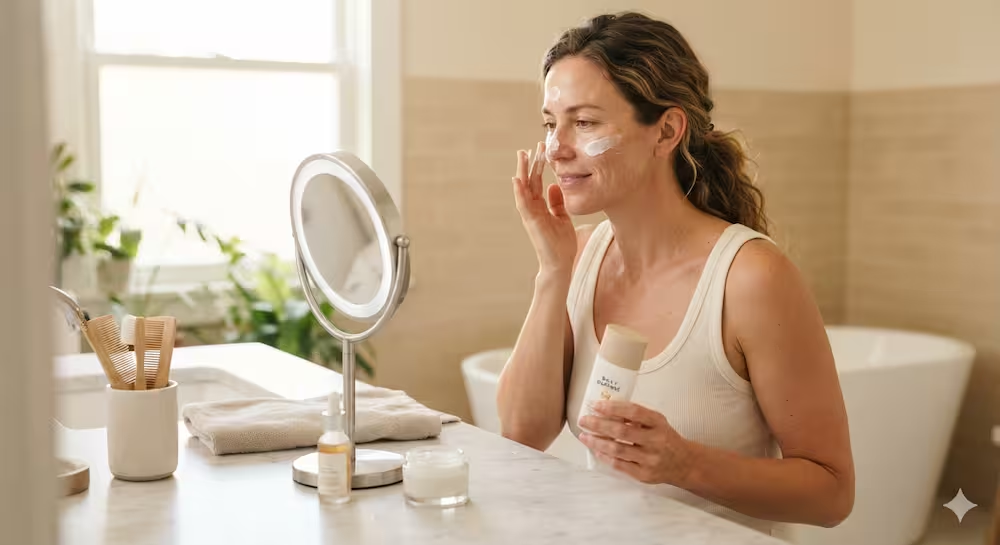
Step 1: Identify Your Actual Needs
Before buying more beauty products, ask yourself:
- What is currently bothering me?
- What part of my routine feels difficult?
- Which products do I already use and enjoy?
- What can I realistically do every day?
- Do I have a specific skin or hair concern that needs professional advice?
For example, if your biggest concern is dry skin, you may benefit more from a gentle cleanser and a suitable moisturizer than from adding five different serums.
If your hair feels difficult to manage every morning, simplifying your hairstyle or wash routine may be more useful than buying another styling product.
Start with the problem, not the product.
Step 2: Build a Basic Morning Routine
Your morning routine does not need to take 30 minutes.
A simple version could look like this:
Skincare
- Cleanse if appropriate for your skin and routine
- Apply moisturizer if needed
- Apply appropriate sun protection before daytime exposure
Hair
- Brush, detangle, refresh, or style as needed
Personal care
- Brush your teeth
- Apply deodorant
- Apply lip balm if desired
Appearance
- Add minimal makeup or grooming only if you want to
Dermatologists generally recommend gentle cleansing and advise against harsh scrubbing, which can irritate the skin.
If you use sunscreen, look for a product appropriate for your skin and follow its label instructions. Dermatology guidance commonly recommends broad-spectrum protection with SPF 30 or higher when using sunscreen for daytime sun protection.
Step 3: Keep Your Evening Routine Even Simpler
Your evening routine can focus on removing the day and preparing for tomorrow.
For example:
- Remove makeup if you wear it.
- Cleanse your face.
- Apply any appropriate treatment you regularly use.
- Moisturize if needed.
- Do a quick hair and personal care routine.
The American Academy of Dermatology recommends applying treatment products after cleansing, followed by moisturizer and/or sunscreen, depending on the routine and time of day.
The key is not to add steps simply because they are popular online.
A Simple Morning and Evening Beauty Routine
| Routine | Essential Steps | Optional Steps | Approximate Time |
|---|---|---|---|
| Morning | Skincare basics, personal care, hair refresh | Makeup, styling, extra grooming | 5–15 minutes |
| Evening | Cleanse, personal care, prepare for bed | Targeted skincare, hair treatment | 5–15 minutes |
| Weekly | Review what needs attention | Hair mask, exfoliation, manicure, grooming | Varies |
This is only a framework. Your routine may be shorter or longer depending on your preferences and needs.
The best low-maintenance beauty routine is one you can repeat without feeling that you have failed when life gets busy.
Choose Beauty Products Based on Function, Not Hype
One of the easiest ways to overcomplicate your routine is to buy products because they are trending.
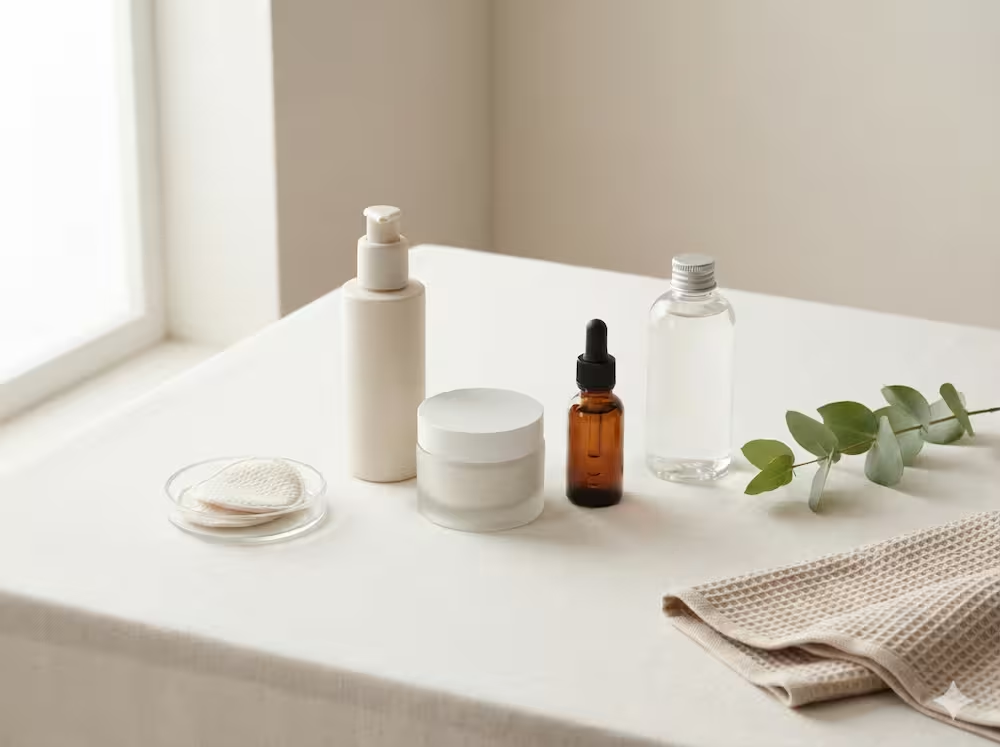
Instead, ask what job each product performs.
For example:
| Need | Possible Product Category |
| Remove dirt, oil, or makeup | Gentle cleanser |
| Support dry-feeling skin | Moisturizer |
| Daytime UV protection | Broad-spectrum sunscreen |
| Address a specific skin concern | Appropriate targeted treatment |
| Clean the scalp and hair | Shampoo |
| Improve manageability | Conditioner or leave-in product |
| Add polish | Makeup or styling product, if desired |
You do not need every product in every category.
Before buying something new, ask:
What problem does this product solve, and do I already own something that performs the same function?
This simple question can reduce clutter, unnecessary spending, and product overload.
The American Academy of Dermatology also notes that effective skincare does not have to be expensive and that a simplified approach can reduce both cost and the risk of irritation from excessive product use.
Create Beauty Habits That Are Easy to Maintain
A routine only becomes useful when you actually do it.
The easiest way to build lasting simple beauty habits is to connect them to things you already do.
Keep products where you use them
Place your evening skincare products near the sink or wherever you normally get ready for bed.
Keep hair products together rather than scattered across different rooms.
Make the routine obvious and convenient.
Reduce the number of decisions
If you have 15 products to choose from every morning, your routine requires more mental energy.
Create a small group of reliable beauty essentials.
For example:
- One cleanser
- One moisturizer
- One sunscreen
- One shampoo
- One conditioner, if needed
- A few personal care essentials
You can always add specialized products later.
Have a “busy day” version
Your full routine might take 15 minutes, but your minimum routine could take five.
For example:
Full routine: cleanse, moisturize, sunscreen, style hair, makeup.
Minimum routine: basic cleansing or refresh, sun protection when appropriate, deodorant, lip balm, and quick hair grooming.
Having a shorter version prevents an all-or-nothing mindset.
Personalize Your Routine for Your Skin Type
A simple routine should still be flexible.
Common skin characteristics include:
- Dry
- Oily
- Combination
- Sensitive
- Acne-prone
Your skin may also change with seasons, environment, age, hormonal changes, medications, or other factors.
The American Academy of Dermatology notes that products should be selected with individual skin characteristics in mind and suggests consulting a board-certified dermatologist when you are unsure about your skin type or have persistent concerns.
If your skin feels dry
Consider a gentle cleanser and moisturizer. Applying moisturizer to slightly damp skin may help trap water in the skin.
If your skin is oily or acne-prone
Avoid assuming that oily skin needs harsh cleansing. Some people with acne-prone skin still benefit from moisturizing, particularly when using products that can cause dryness or irritation.
Look for products designed for your needs, and consider professional advice for persistent or severe acne.
If your skin is sensitive
A shorter routine can make it easier to identify what is causing irritation.
Introduce new products gradually and stop using a product if it causes a concerning reaction. If you have persistent irritation or another skin condition, seek advice from a qualified healthcare professional or dermatologist.
Common Mistakes That Make Beauty Routines Too Complicated
1. Buying every trending product
New does not always mean necessary.
A product should earn a place in your routine by serving a clear purpose.
2. Changing your routine too often
Constantly switching products can make it difficult to know what is helping or causing irritation.
Consistency gives you a better opportunity to understand how your skin or hair responds over time. The AAD similarly emphasizes allowing an appropriate amount of time for a routine to work rather than constantly changing products.
3. Using too many active ingredients at once
Layering multiple strong or potentially irritating ingredients without understanding how they interact can cause problems.
If you want to add a treatment product, introduce it carefully and follow professional or manufacturer guidance where appropriate.
4. Copying someone else’s routine exactly
Your favorite creator may have a different skin type, climate, lifestyle, budget, and beauty preferences.
Use other routines for inspiration, not as a prescription.
5. Making your routine too ambitious
A routine that takes an hour may be enjoyable occasionally, but it may not be realistic every day.
Your regular routine should fit your normal life.
A Simple Beauty Routine Checklist
Use this checklist to build your own routine:
Daily skincare
- I use a gentle cleansing approach appropriate for my skin.
- I moisturize when my skin needs it.
- I use appropriate sun protection during daytime exposure.
- I avoid adding unnecessary products.
Hair care
- My wash routine suits my hair and scalp.
- I use conditioner or other products only when helpful.
- My hairstyle is manageable for my lifestyle.
Personal care
- I maintain basic hygiene and oral care.
- I keep my essential products easy to access.
- I have a quick routine for busy days.
Beauty habits
- My routine fits my schedule.
- I know why I use each product.
- I avoid buying products I do not need.
- I adjust my routine when my needs change.
Frequently Asked Questions
What is the simplest beauty routine?
The simplest beauty routine usually focuses on basic skincare, hair care, and personal care. For skincare, a straightforward routine may include gentle cleansing, moisturizing when needed, and appropriate daytime sun protection. Hair and makeup steps can be added based on personal preference.
How many beauty products do I really need?
There is no exact number. You only need products that serve a useful purpose in your routine. Many people can build an effective everyday routine around a small collection of reliable beauty essentials.
What should a daily beauty routine include?
A daily beauty routine may include skincare, oral care, personal hygiene, hair care, and optional grooming or makeup. The exact routine should reflect your needs, preferences, schedule, and skin or hair characteristics.
Is a 10-step beauty routine better?
Not necessarily. More steps do not automatically produce better results. Using too many skincare products can increase the risk of irritation, especially when multiple active ingredients are involved. A consistent routine with appropriate products may be easier to maintain.
How can I create a low-maintenance beauty routine?
Choose a small number of products, keep them in convenient locations, create a five-minute version for busy days, and focus on habits you can realistically repeat.
How long should an everyday beauty routine take?
It depends on your preferences, but a practical routine can often be completed in 5 to 15 minutes. The goal is not to spend a certain amount of time. The goal is to create a routine that feels manageable.
When should I see a dermatologist?
Consider seeing a qualified dermatologist for persistent, severe, painful, or worsening skin concerns, or if products repeatedly cause irritation. A professional can help identify the underlying issue and recommend appropriate treatment.
Key Takeaways
- A simple beauty routine does not need dozens of products.
- Start with the basics and add products only when they serve a clear purpose.
- Consistency is usually more sustainable than an overly complicated routine.
- Your skincare, hair care, and personal care habits should reflect your individual needs.
- Keep products convenient and create a shorter routine for busy days.
- Do not copy every trend or assume that more products mean better results.
- Adjust your routine when your skin, hair, lifestyle, or environment changes.
Conclusion
Creating a simple beauty routine starts with letting go of the idea that beauty has to be complicated.
You do not need to follow every trend, buy every new product, or spend an hour getting ready each day. Start with a few beauty essentials that meet your actual needs, create a realistic morning and evening routine, and build habits that are easy to repeat.
The best simple beauty routine is not the one with the most steps. It is the one that fits naturally into your life and helps you feel clean, comfortable, confident, and cared for.
Once your basic routine is established, the next step is to learn how to choose the right skincare and beauty products for your individual needs rather than adding products simply because they are popular.
