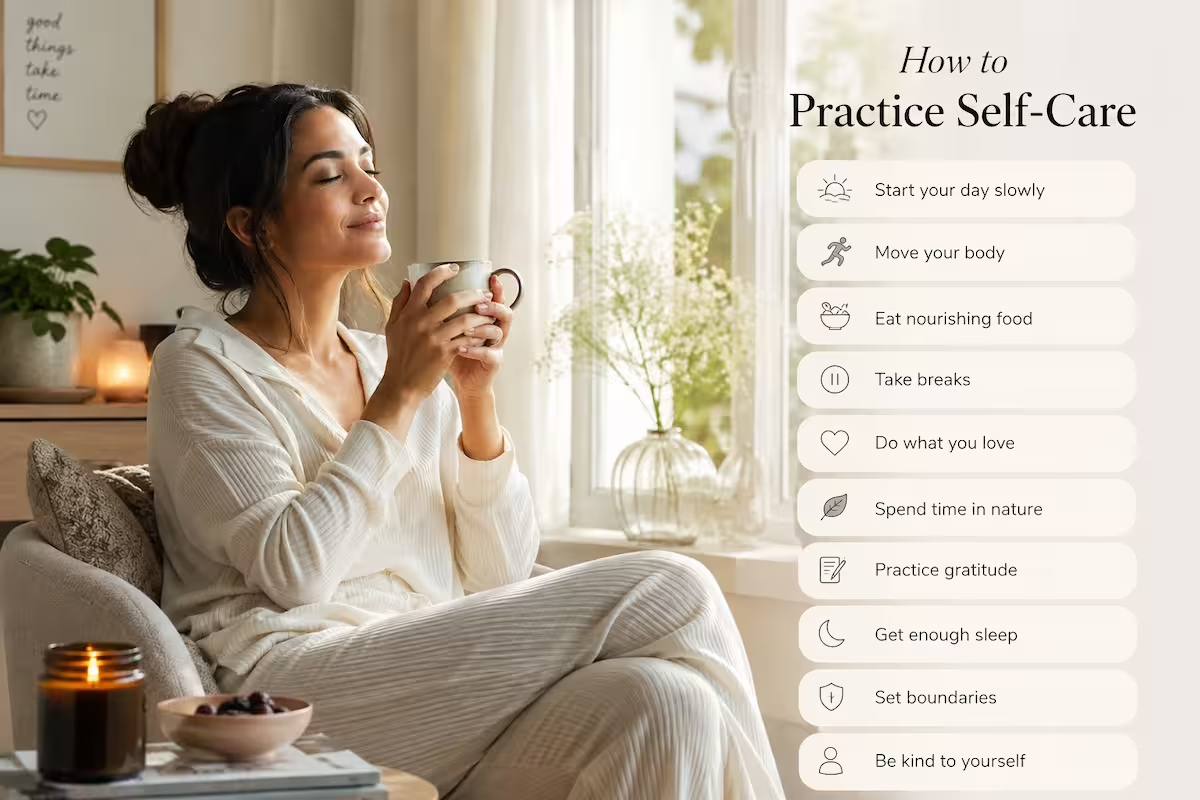
Self-care is often presented as something elaborate—a spa day, a long morning routine, or a full day away from responsibilities. In reality, how to practice self-care can be much simpler. It can mean getting enough rest, taking a quiet break, setting a healthy boundary, preparing a nourishing meal, writing in a journal, or giving yourself a few uninterrupted minutes to reset.
At its core, self-care is about paying attention to what you need and making practical choices that support your physical, emotional, and everyday well-being.
The best self-care routine is not necessarily the longest or most impressive one. It is one that fits your real life and is sustainable enough to become part of it.
What Is Self-Care?
Self-care means intentionally taking steps to look after your well-being and meet your everyday needs. It can include rest, movement, personal care, emotional reflection, social connection, relaxation, healthy routines, and time away from constant demands.
Self-care does not mean ignoring responsibilities or putting yourself first in every situation. Instead, it means recognizing that your own needs matter too.
For some women, self-care may be a quiet evening without their phone. For someone else, it might be going for a walk, organizing a stressful part of the home, asking for help, or finally making time for a hobby.
There is no single correct self-care formula.
How to Practice Self-Care in Everyday Life
A practical approach to self-care starts with noticing what you need rather than collecting an endless list of things you should do.
Try these simple steps:
- Notice what is draining you. Are you tired, overstimulated, lonely, stressed, or simply in need of a break?
- Identify what would genuinely help. Your need might be rest, movement, connection, quiet, organization, or personal time.
- Choose one manageable action. Start with something you can realistically do today.
- Make it part of your routine. Small, repeatable habits are often easier to maintain than occasional major efforts.
- Adjust when your circumstances change. Self-care should support your life, not create another source of pressure.
The goal is not to do everything. The goal is to respond to your needs with more intention.
Start With the Basics
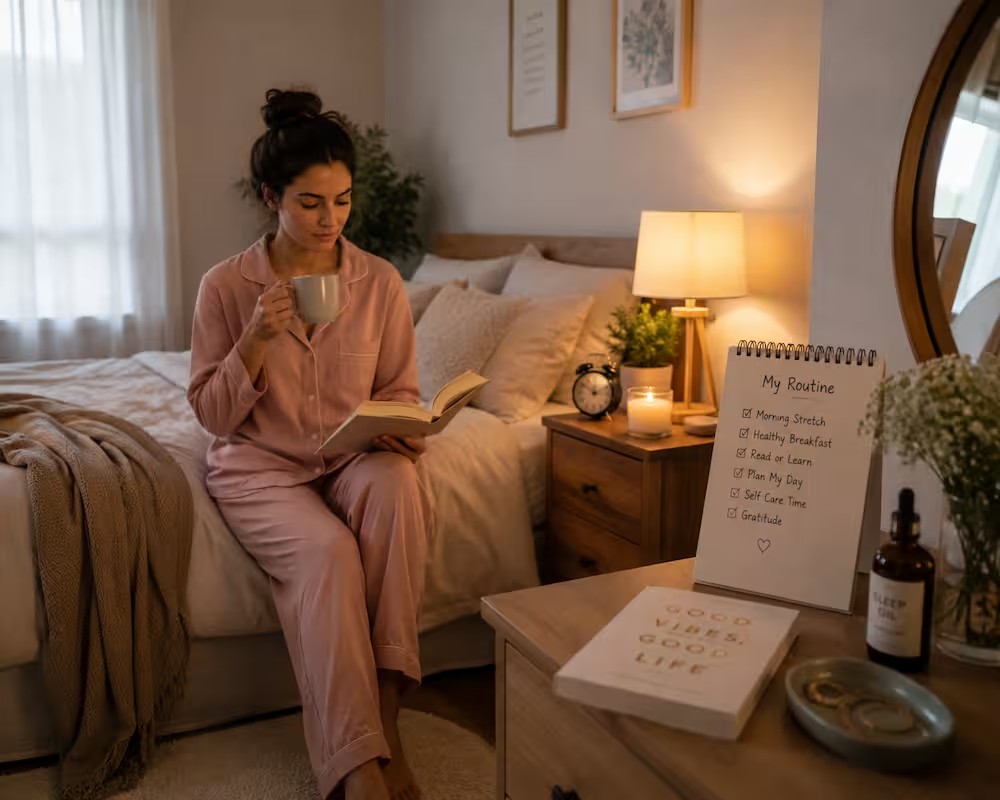
Before creating an elaborate self-care plan, look at the foundations of your everyday life.
Prioritize Rest
When life gets busy, rest is often one of the first things to disappear from the schedule. Instead of treating rest as something you earn after completing everything, consider it a normal part of taking care of yourself.
This might mean creating a calmer bedtime routine, taking a short break during a demanding day, or protecting some quiet time in the evening.
Make Time for Movement
Self-care does not have to mean an intense workout. A walk around your neighborhood, gentle stretching, dancing to a few songs, or simply getting away from your desk can provide a useful change of pace.
Choose movement that feels realistic and enjoyable rather than turning it into another obligation.
Eat Regularly and Mindfully
Food can also be part of everyday self-care. Preparing a simple meal, keeping convenient nourishing options available, and giving yourself enough time to eat can make daily life feel more manageable.
There is no need to make every meal complicated. Practical self-care often means making healthy choices easier, not making them perfect.
Build Simple Self-Care Habits
Self-care becomes easier when it is connected to habits you already have.
For example:
- Take a few quiet minutes with your morning drink.
- Step outside for fresh air during a break.
- Put your phone away while eating.
- Spend ten minutes tidying one stressful area.
- Write down your thoughts before bed.
- Schedule time for something you enjoy.
- Say no to an unnecessary commitment when your schedule is already full.
These small actions may seem ordinary, but that is part of what makes them practical.
Instead of asking, “What huge change should I make?” try asking:
“What small thing would make today feel a little better?”
Practice Emotional Self-Care
Self-care is not only about physical routines. Your emotional needs deserve attention too.
Emotional self-care can involve recognizing how you feel without immediately judging yourself for it. You might write in a journal, talk with someone you trust, take some quiet time, or step away from an overwhelming situation.
Give Yourself Space to Reflect

Journaling can be a simple way to slow down and understand what is happening in your mind.
You could start with questions such as:
- What has been taking most of my energy lately?
- What do I need more of right now?
- What can I let go of today?
- What is one thing I handled well recently?
- Where do I need better boundaries?
You do not need to write several pages. Even a few honest sentences can help you pause and reflect.
Set Healthier Boundaries
Sometimes the most useful self-care activity is saying no.
You might decline an invitation when you need rest, stop responding to messages during your personal time, or explain that you cannot take on another responsibility.
Boundaries are not about being unkind. They are about recognizing your limits and communicating them clearly.
Make Self-Care Work When You’re Busy
One of the biggest problems with many self-care routines is that they assume you have plenty of free time.
Real life does not always work that way.
If you are working, studying, caring for family, managing a household, or balancing several responsibilities, start with small actions.
Try 5- to 10-Minute Self-Care

A short break can be more realistic than waiting for an entire free afternoon.
You could:
- Sit somewhere quiet without your phone.
- Make a cup of tea and drink it slowly.
- Stretch for a few minutes.
- Take a short walk.
- Listen to a favorite song.
- Write down what is worrying you.
- Step outside for some fresh air.
- Do a quick reset of your personal space.
The point is not that ten minutes will solve every problem. It is simply a manageable opportunity to pause.
Practice Self-Care at Home
You do not need to spend money or leave home to take better care of yourself.
Some simple self-care ideas at home include taking a relaxing shower, reading a few pages of a book, changing into comfortable clothes, preparing a favorite meal, doing a gentle skincare routine, journaling, organizing a small area, or having a quiet evening without unnecessary notifications.
You can also create a small space that signals relaxation. It could be a comfortable chair, a bedside table with your favorite book, or simply a clean corner where you can sit without distractions.
The environment does not need to look perfect. It only needs to work for you.
Create a Self-Care Routine You Can Maintain
A self-care routine should fit your actual schedule.
Instead of planning an hour of self-care every morning, start with two or three small habits.
For example:
Morning:
Take five quiet minutes before checking messages.
During the day:
Step away from work for a short break.
Evening:
Put your phone aside for a while and spend some time doing something relaxing.
Weekly:
Set aside a little longer for an activity that helps you recharge.
You can change this routine whenever your needs change.
A routine is useful when it supports you—not when you feel guilty for failing to follow it perfectly.
Make a Simple Self-Care Plan
If you are not sure where to begin, create a basic weekly plan.
Choose one activity from each area:
| Area | Simple option |
|---|---|
| Rest | Protect an earlier bedtime |
| Movement | Take a short walk |
| Emotional care | Journal for ten minutes |
| Personal time | Read or enjoy a hobby |
| Connection | Talk to someone you trust |
| Environment | Reset one cluttered area |
You can then decide when each activity realistically fits into your week.
Keep the plan flexible. If something does not work, change it rather than abandoning self-care altogether.
Self-Care Does Not Have to Be Expensive
There is a common idea that self-care requires buying something: skincare products, candles, subscriptions, treatments, or expensive experiences.
Those things can certainly be enjoyable, but they are not requirements.
Some of the most accessible self-care practices cost nothing:
- Taking a walk
- Reading something you enjoy
- Journaling
- Calling a friend
- Sitting quietly
- Taking a break from social media
- Spending time outdoors
- Stretching
- Listening to music
- Saying no to something unnecessary
- Going to bed earlier when possible
The value of self-care comes from how well an activity meets your needs, not from how much money you spend on it.
Common Self-Care Mistakes to Avoid
Self-care can become counterproductive when it creates more pressure.
Trying to Do Everything at Once
You do not need a complicated morning, afternoon, and evening routine immediately. Start with one or two habits.
Treating Self-Care as a Reward
You do not have to finish every task before you are allowed to rest. Rest and personal time are legitimate parts of everyday life.
Comparing Your Routine With Someone Else’s
Another person’s self-care routine may look completely different from yours. Your schedule, responsibilities, personality, and needs are unique.
Making Self-Care Another Chore
If your routine becomes a long checklist that makes you feel guilty, simplify it.
Good self-care should make your life more manageable, not give you another standard you feel you have to meet.
When to Seek Additional Support
Self-care can be useful for everyday well-being, but it is not a replacement for professional help when you need it.
If you are dealing with persistent emotional distress, significant changes in your ability to function, or concerns about your physical or mental health, consider speaking with an appropriately qualified healthcare professional.
Knowing when you need additional support is also a form of taking care of yourself.
Frequently Asked Questions About Self-Care
What is the simplest way to practice self-care?
Start by identifying what you need most today and choose one small action that addresses it. That might mean resting, taking a walk, eating a proper meal, journaling, setting a boundary, or spending a few quiet minutes alone.
How can I practice self-care when I am very busy?
Choose short activities that fit naturally into your day. A five-minute break, brief walk, quick journal entry, or quiet moment without your phone can be more realistic than waiting for several hours of free time.
What are some easy self-care activities at home?
Reading, journaling, taking a relaxing shower, preparing a favorite meal, listening to music, stretching, organizing a small space, practicing a simple skincare routine, or spending some quiet time offline are all accessible options.
How often should I practice self-care?
There is no universal schedule. Small forms of self-care can happen daily, while longer activities might fit into your weekly routine. The most useful approach is to create habits that are realistic for your circumstances.
Is self-care selfish?
No. Taking reasonable care of your own needs does not automatically mean neglecting other people. Healthy self-care can help you recognize your limits, protect your time, and make more intentional choices about your responsibilities.
Final Thoughts
Learning how to practice self-care does not require creating a perfect routine or changing your entire lifestyle.
Start smaller.
Notice what you need. Choose one realistic action. Give yourself permission to rest, reflect, recharge, or ask for support when necessary. Then repeat the practices that genuinely fit your life.
The most sustainable self-care is usually not the most elaborate. It is the kind you can return to on an ordinary Tuesday when life is busy, your schedule is full, and you simply need a moment to take better care of yourself.
Your self-care routine should not be another measure of perfection. It should be a practical way to make space for your own well-being, one small choice at a time.
