
The fastest way to manage your time better is to stop trying to do everything and start doing the right things first. These time management tips can help you focus on what matters most: write down your top three priorities each morning, block time on your calendar to protect focused work, and remove one recurring distraction, like checking your phone every few minutes. Small, consistent changes like these matter more than any single productivity app or system.
You Don’t Need More Hours. You Need a Better System.
If your to-do list feels longer at the end of the day than it did in the morning, you’re not alone, and you’re probably not doing anything wrong. Most people haven’t been taught how to manage time. School teaches you how to finish assignments. It doesn’t teach you how to decide what deserves your attention when everything feels urgent.
Good time management isn’t about squeezing more tasks into your day. It’s about spending your limited hours on what actually moves your life and work forward, and being honest about what can wait, get delegated, or get dropped entirely.
This guide covers time management tips that work in real life, not just on paper: how to prioritize without guilt, how to protect focused work from constant interruptions, and how to build habits that stick instead of routines you abandon after a week.
Start With Priorities, Not a To-Do List
A to-do list tells you what needs doing. It doesn’t tell you what matters most. That’s the gap that leaves people busy all day but no closer to their real goals.
Use the Eisenhower Matrix to Sort Your Tasks
The Eisenhower Matrix sorts tasks into four categories based on urgency and importance:
- Urgent and important: Do these now. A work deadline today, a sick child.
- Important but not urgent: Schedule these. Long-term projects, exercise, planning.
- Urgent but not important: Delegate these if possible. Many emails and interruptions fall here.
- Neither urgent nor important: Drop or minimize these. Mindless scrolling, low-value meetings.
Most people spend too much time in the “urgent but not important” quadrant, reacting to whatever feels loudest instead of working on what actually matters. Reviewing your task list against these four categories once a day, even briefly, makes it much easier to see where your time is really going.
Pick Your Top Three Tasks Each Day
Rather than working from a long, unsorted list, choose three tasks that would make the day feel successful if you finished nothing else. This forces a real decision about priority instead of letting your inbox or your calendar make it for you.
If you only get through one of the three, that’s still progress on something that mattered. If you clear ten small tasks from a scattered list, you might end the day feeling busy but not actually further ahead.
Protect Focused Time With Time Blocking
Time blocking means assigning specific blocks of time on your calendar to specific tasks or types of work, rather than working from an open-ended list. It turns “I’ll get to that today” into “I’m working on that from 9 to 10:30.”
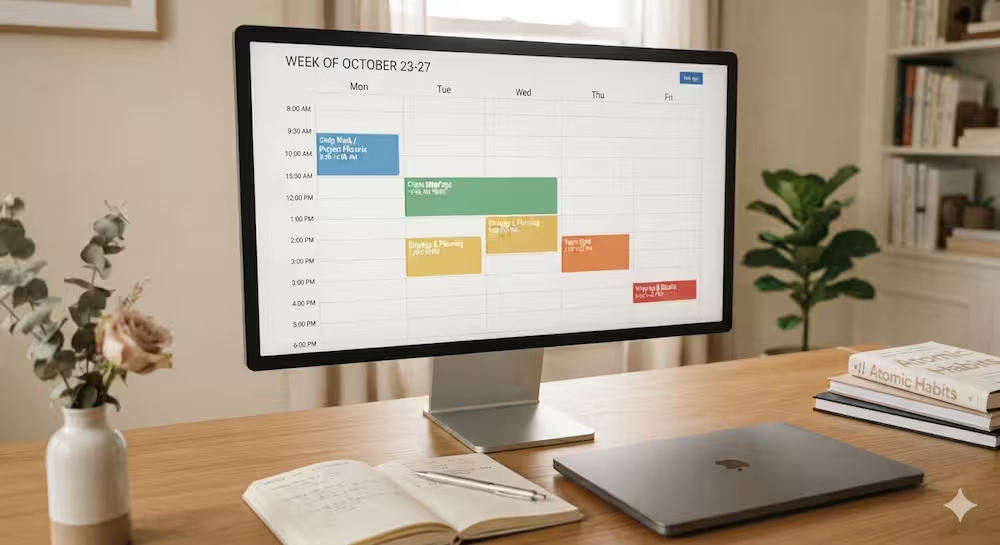
This matters because of how costly interruptions really are. Research from Gloria Mark, an informatics professor at UC Irvine who has spent years studying attention and interruptions in the workplace, found it takes an average of 23 minutes and 15 seconds to fully return to a task after being interrupted. That single number explains why a day full of pings and quick questions can leave you exhausted with little to show for it. It’s not the interruptions themselves that cost the most time. It’s the recovery.
To use time blocking well:
- Block your most demanding work during the hours you naturally focus best, whether that’s early morning or after everyone else has logged off.
- Keep blocks realistic. A 90-minute block you actually protect beats a 4-hour block that gets interrupted six times.
- Leave buffer time between blocks for things that run long, because they usually do.
- Batch similar tasks together, like replying to messages or making phone calls, instead of scattering them throughout the day.
Reduce the Distractions Pulling You Off Track
You can have the best schedule in the world and still lose hours to distraction if your environment keeps interrupting you. Most of that interruption is self-inflicted, and that’s actually good news, because it means you have more control over it than it feels like.
Turn Off Non-Essential Notifications
Every notification is a small invitation to switch tasks. Turning off notifications for anything that isn’t truly time-sensitive protects your focus without requiring extra willpower. Check messages and email at set times instead of reacting the moment something arrives.
Keep Your Phone Out of Reach During Focus Time
Physical distance matters more than intention. A phone sitting face-down next to you is still a distraction because part of your attention stays on the possibility of a notification. Put it in another room, or at least out of arm’s reach, during blocks of focused work.
Set Boundaries Around Interruptions From Other People
If you work from home or in a shared space, quick “got a minute?” requests can quietly eat an entire morning. It’s reasonable to say, “I’m in the middle of something, can I find you in twenty minutes?” Most people respect that far more than you’d expect, and it protects the deep focus your important work needs.
Match Your Tasks to Your Energy, Not Just Your Schedule
Time management isn’t only about clock time. Energy matters just as much. An hour of focused work when you’re sharp can accomplish more than three hours when you’re running on empty.
Pay attention to when you naturally think most clearly, and protect that window for your hardest or most important work. Save lower-energy periods, like the mid-afternoon slump many people experience, for routine tasks: replying to emails, filing, tidying up, or anything that doesn’t require deep concentration.
This is especially useful if you’re managing a demanding job alongside home responsibilities, where your day rarely runs in one uninterrupted block. Working with your energy instead of against it makes the most of the pockets of time you actually have.
Build a Simple Weekly Planning Habit
Daily planning helps, but a short weekly check-in prevents your days from becoming a series of reactions to whatever comes up. Spend 15 to 20 minutes at the start or end of each week to:

- Look ahead at appointments, deadlines, and commitments already on the calendar.
- Identify the two or three most important outcomes for the week.
- Block time for those priorities before your calendar fills up with everything else.
- Notice what didn’t get done last week and decide honestly whether it still matters.
This habit is what keeps time management from becoming a one-day fix. A single productive Monday doesn’t change much on its own. A weekly rhythm does.
Common Time Management Mistakes to Avoid
- Trying to plan every minute. Overly rigid schedules break the moment something unexpected happens, which is often. Leave room for flexibility.
- Multitasking on important work. Splitting attention between two demanding tasks usually means both take longer and turn out worse than if you’d done them one at a time.
- Saying yes automatically. Every new commitment competes with your existing priorities. A pause before agreeing to something gives you room to check whether it actually fits.
- Chasing a perfect system. The best time management method is the one you’ll actually keep using, not the most elaborate one you found online.
- Ignoring rest. Skipping breaks to “save time” usually backfires, since focus and decision-making both decline without recovery.
A Simple Time Management Checklist
| Habit | Why It Helps |
|---|---|
| Pick top 3 priorities each morning | Keeps your focus on what matters, not just what’s loud |
| Block time for focused work | Protects deep work from constant interruption |
| Turn off non-urgent notifications | Reduces the 23-minute refocus cost of interruptions |
| Match tasks to your energy levels | Gets more done in the hours you have |
| Do a weekly planning check-in | Prevents the week from becoming purely reactive |
| Say no to low-priority requests | Protects time for what you’ve already committed to |
Frequently Asked Questions
What is the most effective time management technique?
There isn’t one technique that works for everyone, but time blocking combined with daily prioritization tends to help the widest range of people, because it addresses both what to work on and when to actually do it.
How do I manage my time better when I have too much to do?
Start by separating what’s truly urgent from what only feels urgent. Use a simple system like the Eisenhower Matrix to identify what can wait, what can be delegated, and what genuinely needs your attention today. Trying to do everything at once usually means nothing gets your full focus.
Why do I still feel behind even when I follow a schedule?
This often happens when a schedule is too packed to survive real interruptions, or when it’s built around tasks rather than priorities. A good schedule should leave buffer time and focus on your two or three most important outcomes, not every possible task.
How long does it take to build better time management habits?
Habits vary by person, but consistency matters more than speed. Focusing on one or two changes, like daily prioritization or protecting a single focus block, and sticking with them for a few weeks tends to work better than overhauling your entire routine at once.
Is multitasking ever a good time management strategy?
Generally, no. Multitasking on tasks that require real attention tends to slow both down and increase mistakes. It works better for combining one demanding task with a low-attention one, like listening to a podcast while doing chores.
Key Takeaways
- Time management is about choosing what matters, not fitting in more tasks.
- The Eisenhower Matrix and a daily top-three list make prioritizing concrete instead of overwhelming.
- Time blocking protects focused work, which matters because interruptions can cost over 20 minutes of refocusing time.
- Reducing notifications and setting boundaries around interruptions removes a major source of lost time.
- Working with your natural energy levels, not just your schedule, gets more out of the hours you have.
- A short weekly planning habit keeps your days from becoming purely reactive.
Conclusion
Better time management doesn’t come from finding the perfect app or the most detailed schedule. It comes from a few consistent habits: deciding what matters before the day gets away from you, protecting time for that work, and cutting back on the distractions that quietly drain your focus. Start with one change, like a daily top-three list or a single protected focus block, and build from there.
If procrastination tends to be the bigger obstacle in your day rather than scheduling itself, it’s worth reading alongside a piece on overcoming procrastination, since the two problems often show up together and respond to some of the same fixes.
