

To plan your week, set aside 15–20 minutes before it starts, list your top 3 priorities, block time for them on your calendar, and leave gaps for the unexpected. Review daily and adjust as needed. This simple weekly planning habit cuts down decision fatigue and helps you finish the things that actually matter.

If Sunday night finds you scrambling to remember what’s due Monday, you’re not alone. Most women juggling work, family, and everything in between don’t struggle because they’re disorganized. They struggle because no one ever taught them a system to plan your week that fits real life instead of an idealized one.
Learning how to plan your week well isn’t about cramming more into your days. It’s about deciding, in advance, what deserves your time and energy so you’re not making that decision fifty times a day while running on empty. A short planning session up front means fewer forgotten deadlines, less scrambling, and more room to actually enjoy your week instead of just surviving it.
This guide walks through a realistic, repeatable weekly planning approach, even if your schedule changes constantly and your to-do list never seems to shrink.
Why Planning Your Week Actually Matters
When you don’t plan your week, every day starts with the same question: what should I even do first? That small decision, repeated dozens of times, adds up to real mental fatigue by Wednesday.
A weekly plan gives you a home base. You’re not reacting to whatever email or request lands in front of you first. You’re working from a list you already trusted enough to write down.
There’s a psychological reason unplanned tasks feel heavier than planned ones. Psychologist Bluma Zeigarnik documented what’s now called the Zeigarnik effect: unfinished or unplanned tasks tend to occupy more mental space than tasks you’ve already mapped out, because your brain keeps flagging them as “unresolved.” Writing a plan for the week doesn’t just organize your time, it frees up mental bandwidth you didn’t know you were spending.
Planning your week also reduces the odds of “urgent but unimportant” tasks quietly taking over. Without a plan, the loudest task wins, not the most important one.
How to Plan Your Week in 5 Simple Steps
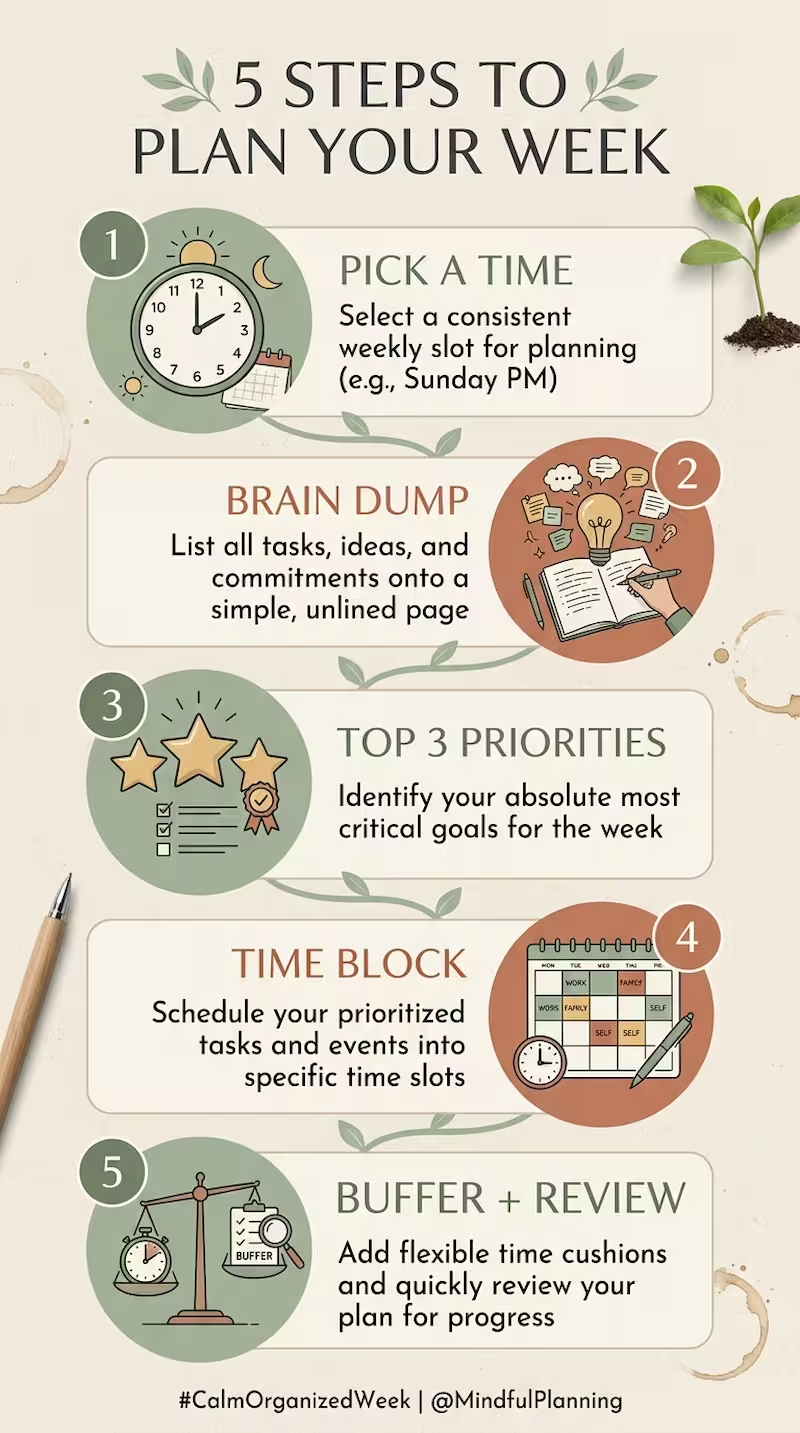
You don’t need a complicated system or an expensive planner to plan your week well. You need five steps and about 20 minutes.
Step 1: Pick a Consistent Planning Time
Choose one recurring slot, Sunday evening or Monday morning tend to work best, and protect it like an appointment. Consistency matters more than the exact day. When planning becomes a habit tied to a specific time, you stop having to decide when to plan, which is half the battle.
Research on habit formation from University College London found that repeating a behavior in a stable context is what turns it into an automatic habit over time, rather than something you have to talk yourself into each week.
Step 2: Do a Brain Dump
Before you organize anything, get everything out of your head. Write down every task, appointment, errand, and half-formed idea rattling around in your mind. Don’t sort or prioritize yet, just capture.
This step alone reduces the mental load of trying to remember everything, and it usually reveals that your week looks more manageable on paper than it felt in your head.
Step 3: Choose Your Top 3 Priorities
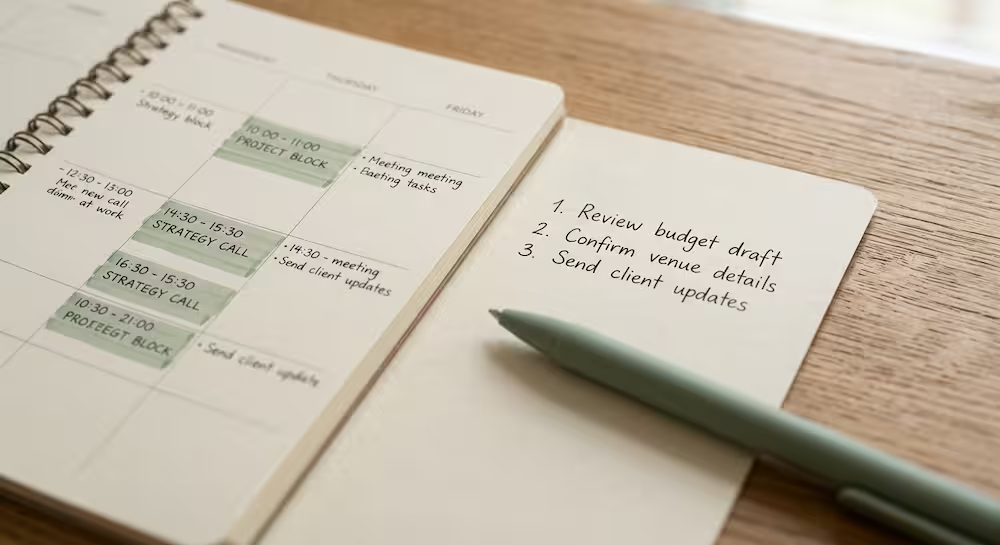
Look at your brain dump and pick the three things that would make the week feel successful if you finished them, and nothing else. Not the three loudest tasks. The three that actually matter.
This is where most people planning their week go wrong: they try to plan a week where everything gets equal weight. It doesn’t work. A short, honest priority list beats a 40-item list every time.
Step 4: Time-Block Your Priorities First
Open your calendar and place your top three priorities into specific time slots before you add anything else. If you wait until the end to schedule what matters most, it gets pushed out by smaller, more urgent-feeling tasks.
Time blocking doesn’t mean scheduling every single minute. It means giving your most important work a protected place on the calendar so it can’t quietly disappear.
Step 5: Leave Buffer Time and Review Daily
A week planned down to the last minute falls apart the moment something unexpected happens, and something always does. Leave 20-30% of your week unscheduled for overflow, interruptions, and the tasks you didn’t know about yet.
Each morning, take two minutes to glance at your plan and adjust. This short daily check-in, paired with your productive morning routine, keeps your weekly plan realistic instead of aspirational.
Weekly Planning Methods Compared
There’s more than one way to plan your week. The right method depends on your schedule, your job, and how much structure you personally need.
| Method | Best For | Time Needed | Flexibility |
|---|---|---|---|
| Time blocking | Structured jobs, back-to-back days | 15-20 min/week | Low to medium |
| Priority-first (top 3) | Busy or unpredictable schedules | 10-15 min/week | High |
| Theme days | Freelancers, business owners | 15 min/week | Medium |
| Digital planner apps | Tech-comfortable planners | 10 min/week | Medium to high |
If your days rarely go as expected, a priority-first weekly planning approach will serve you better than rigid time blocking. If your job has predictable hours, time blocking gives more structure.
Common Mistakes When Planning Your Week
Even a good system can fail if these habits creep in.
- Overloading the list. A plan with 20 tasks isn’t a plan, it’s a wish list. Keep your daily task count realistic, usually 3-5 meaningful items.
- Skipping the buffer time. Scheduling every minute guarantees the plan breaks the first time something runs long.
- Planning only work tasks. A week plan that ignores rest, meals, or family time isn’t sustainable. Build it in on purpose instead of hoping it happens.
- Not reviewing mid-week. Plans made Sunday rarely survive untouched to Friday. A quick Wednesday check-in catches problems early.
- Copying someone else’s system exactly. What works for a content creator’s schedule won’t necessarily work for a nurse doing rotating shifts. Adapt the framework, don’t copy it wholesale.
A Simple Weekly Planning Checklist
Use this checklist each time you plan your week:
- Block 15-20 minutes at your consistent planning time
- Brain dump everything on your mind, no sorting yet
- Circle your top 3 priorities for the week
- Time-block those three priorities first
- Add secondary tasks around the blocked time
- Leave 20-30% of the week unscheduled as buffer
- Do a two-minute review each morning
- Do a five-minute mid-week check-in
Tools That Make It Easier to Plan Your Week
You don’t need fancy software to plan your week, but the right tool removes friction:
- Paper planner or notebook: Best if screens add to your stress rather than reduce it. Simple, tactile, no notifications.
- Digital calendar (Google Calendar, Outlook): Good for time blocking and syncing with family or work schedules.
- Task apps (Todoist, Notion): Useful if you like checking things off and want your brain dump and priorities in one place.
The best tool is the one you’ll actually open every week. A beautiful system you abandon by Wednesday isn’t better than a plain notebook you use consistently.
How Weekly Planning Connects to Your Daily Routine
Planning your week gives you the big picture, but your how to plan your day is where it actually gets done. Think of the weekly plan as the map and the daily plan as the turn-by-turn directions. If you also struggle with stop procrastinating once the week is mapped out, pairing your plan with implementation intentions helps close that gap.
Psychologist Peter Gollwitzer’s research on implementation intentions found that people who decide in advance exactly when and where they’ll do a task are significantly more likely to follow through than people who simply intend to do it “sometime.” Applying this to your weekly plan means writing “Tuesday, 9 a.m., home office” instead of just “finish report.”
If focus tends to slip once the week is underway, a few techniques to stay focused paired with your plan can keep priorities from sliding to Friday.
Frequently Asked Questions
How long should it take to plan your week?
Most people can plan a full week in 15-20 minutes once they have a repeatable system. The brain dump usually takes the longest the first few times; it gets faster as you build the habit.
What day is best to plan your week?
Sunday evening and Monday morning are the most common choices because they sit right before the week begins. The best day is whichever one you can protect consistently, even if that’s Friday afternoon before you clock out.
Should I plan my week on paper or digitally?
Either works. Paper tends to reduce distraction and feels more deliberate. Digital tools sync across devices and make rescheduling easier. Choose based on which one you’ll actually stick with.
What if my week gets thrown off by Tuesday?
This is normal, not a sign your plan failed. Use your daily two-minute review to adjust, and lean on the buffer time you built in during Step 5. A flexible plan you adjust beats a rigid plan you abandon.
How is weekly planning different from daily planning?
Weekly planning sets the priorities and big blocks of time for the whole week. Daily planning breaks those priorities into specific, scheduled actions for a single day. You need both: the week gives direction, the day gives execution.
Key Takeaways
- A short, consistent planning session each week reduces decision fatigue and mental clutter.
- Choosing 3 real priorities works better than a long, unranked task list.
- Time-block your priorities before anything else goes on the calendar.
- Always leave buffer time. An unplanned week and an overplanned week fail for the same reason: no room for reality.
- Review daily and mid-week to keep the plan realistic instead of aspirational.
Conclusion
You don’t need a perfect system to plan your week, you need a repeatable one. Fifteen minutes of honest planning, three real priorities, and a little built-in flexibility will do more for your week than any elaborate planner ever will. Start small this week: pick your planning time, do one brain dump, and choose three priorities. Once weekly planning feels automatic, pairing it with a solid morning routine and better time management habits rounds out a system that actually holds up under a busy, real-life schedule.

1 thought on “How to Plan Your Week: A Simple, Confident Method for Busy Women”